


How to create communication with children through Redirecting Negative Behaviors + Safety Tips
- journeywithbyn

- Feb 15, 2023
- 9 min read
Updated: Feb 23, 2023
This week I will be addressing how I personally practice redirecting negative behaviors/unsafe play that can hurt someone or the child.
Negative Behaviors
Negative behaviors and unsafe play can mean a plethora of things, but I will be focusing on five behaviors in this blog: hitting, screaming, throwing toys, biting, and stepping on toys.
Negative behaviors can be when a child is upset and throws a tantrum by throwing themselves on the ground or throwing their head backward.
Unsafe play isn't always considered negative behavior, it can just be a safety hazard like stepping on toys that can lead to slipping or falling and in the process hurting themselves.

The 3 reasons I want to focus on these topics:
Reason 1:
It doesn't help the situation for both the parent and child when things get heated and escalate.
Let's be real... The next stages would be yelling and possibly spanking (no shame, maybe many of us have been in this position that's why we are here because we want to be better and try not to be in that situation).
Reason 2:
The child learns how to communicate with their voice and body through their anger and frustrations.
This causes the child to grow up thinking, "I need to communicate like this all the time so I can get my way."
Reason 3:
The child doesn't get the chance to learn how to manage their emotions and may have a harder time in the future, even as adults to self-regulate and also to develop a healthy sense of emotional intelligence.
The Redirecting Strategies that I use are from observations, child development courses, in-field classroom environments, and articles.
I am sharing these strategies because I notice that my son becomes more aggressive at home.
He also tends to have more tantrums and high levels of negative behaviors at home and at daycare when I don't address these daily or weekly.
Through these redirection strategies, he learns to choose safer choices to express his dismay and doesn't resort to aggressive behaviors as his go-to.
It also helps him to feel heard and build self-awareness by communicating with his words and actions instead of out-of-control outbursts.

1. Hitting:
If it is difficult to have the child stop hitting, it might be helpful to redirect the child to hit something else as well as expressing, "It hurts when you hit me and I feel sad ( or mad - its okay to be honest so the child learns it isn't a joke/funny).
For example, the soft part of the couch, the bed plush toy, or something close by that is soft or plush (so as not to hurt their hands).
If the child can understand that hitting is not okay when prompted, it's helpful to tell them, "Let's do gentle hands" and continue to use your hands and stroke their hand softly to show them what "gentle" means.
In another scenario, if this still doesn't work and the child just enjoys hitting for fun, then tell them, "You can hit my shoulders (arm or back - like a massage lol) but not my face because it hurts."
It's a good idea not to make this a joke because they will think it is funny and think it's okay to keep hitting.
I like to go the extra mile and say, "But please be gentle, it hurts if you hit hard," and I proceed to show them what gentle hitting looks like both on their shoulder and (if your child allows) guiding the child's hand to your shoulder (so they know where your shoulder is).
2. Screaming:
I think we all know why children scream.
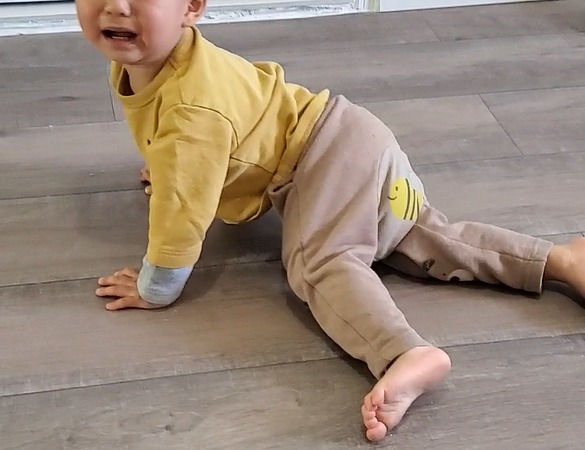
We understand with our mind that they're stressed and they don't know how to channel it in any other way because they're new to life.
Let's be real, even we as adults do the same thing when it comes down to high levels of stress.
This strategy has TWO PARTS.
PART ONE starts with teaching the child how to take deep breaths and don't forget to do this with your child too (modeling is important).
This will be trying and difficult but don't give up, keep doing it with them because this will give them tools to fall back on when they're adults.
PART TWO is essential.
Equip the child with words to identify his/her emotions, such as, "It sounds like you are feeling mad and sad? If you feel sad/mad, you can say, 'I am feeling mad and sad. Do you feel mad and sad or just sad?'" (one emotion is fine too! The point is to put emotions where their feelings are)
If your child is anything like mine, he, more times than others, would just need a hug.
As a cherry on top, I like to add, "It looks like you are mad and sad about not getting what you want, do you need a hug?"
Whatever response they may give, take it, and let them know if they want a hug or want to share how they're feeling you will be there when they are ready.

If they don't reply or say "No," then let them know you will be nearby when they're ready and let them know they are still loved and it seems like they need some space.
This will ensure the child that they aren't being abandoned for feeling upset.
If the adult is feeling brave they can ask the child if they need some parent time, and do some "Time-In" and sit with the child in a quiet place until they are calm.
Most of the time, the child just needs attention from an adult and doesn't know how to ask so they act out since that is usually how they get the attention they want even if it isn't a positive response.
3. Throwing toys:
In the scenario of flying toy cars or blocks that seem to almost become murder weapons (joking - but sometimes it feels that way right?) the one thing that is the most difficult to stop is throwing.
Sometimes the cute little arm that seems to twist in directions we didn't even know could be possible, can throw curve balls that feel like we are in a baseball game that requires us to protect any and everything in the home like our tv's or the windows and even our faces.
In these instances, it is important to quickly apprehend the toy or item from the child (if need be dodge or block the best that we can) and let the child know as calmly as possible, "This can hurt you or me, so let's try something else."
As not to draw attention to the behavior because this may encourage them to try and get more reactions from the adult or caregiver, yes sometimes children can be conniving.
Children tend to try and get their caregivers' or parents' attention by behaving in such a way (negative or positive) because they crave attention.
Throwing toys is a way for the child to receive said attention and if this child doesn't want to stop throwing toys, redirect the child to throwing soft toys instead.
Show the child (and remind them when they throw heavy solid toys) the toys that CAN (safer) be thrown.
I would say to my son, "Remember these are the toys you CAN throw. (Give him the 'Okay-To-Throwing-Toys').”
Then I would show him 2 or 3 toys to see if he understands.
"Can we throw this toy?" Then wait for their response.
"No (depending on their response), that's right! We don't throw this toy because it's hard and it hurts if it hits someone or maybe it can break something too."
I would go on to show the soft toys, "This toy is okay because it's soft see? It won't hurt or break anything," and throw it softly maybe into a container or onto the couch or rug.
This will be their guideline for understanding boundaries if they choose an activity that may be more on the unsafe side.
Even if the child is much younger than a 2-year-old this is a great foundation for them to have even as a 1-year-old or even younger, when they learn how to pick up and throw things.
**Note: This can be altered too if they choose to keep throwing hard objects, designate a place or container that they can ONLY throw into, and make it a game.
4. Biting
Biting is no fun.
Maybe this is the scariest one for me.
I honestly have a fear of getting bitten by my toddler, as silly as that sounds, it kind of makes sense right?
My son is really the most kindest and thoughtful child I've met, there is no way he will ever do this but we all have those crazy irrational fears, right?
I have the worst-case scenario in my mind, I'm sitting there trying to pry off a toddler (like a piranha) from my finger as I feel my finger tear off my hand.
I know, I know it is so intense and super gruesome, but I think of this and it sends chills down my spine.
A child will probably not do this unless they're fending for their life maybe?
Anyways, just the other night what I imagined in my mind happened, fortunately, it wasn't me BUUUUT unfortunately it was my husband's ear that suffered such a cruel fate.
While I thought of this post and initially thought, "Oh! My son has never bitten us really hard intentionally, and if he ever bit us, he did it playfully."
And then last night my son bit my husband's ear really hard and didn't let go for 2 or 3 seconds.
I ran inside the bedroom (at the time they were running away from me trying to hug my son - a sort of game we came up with where my son would call my husband and say, "Help me Papa" because I refuse to stop hugging and kissing him) and saw this scene where my husband is holding his ear in fear of his ear being torn off of his head.
While I'm in shock and trying to figure out what happened, my husband says, "He bit my ear! Is it bleeding?"
As I inspected his ear I saw deep bit marks but no blood and took a breath of relief I turned to my crying and fear-filled eyes and made sure he was okay.
After everyone calmed down, I went and asked my son, "how come you bit Papa?"
Because he is a 2-year-old, it's okay to ask him more specific questions and wait for his response.
I asked him multiple questions kindly and waited for him to say yes or no, at this age, he is able to understand and think for himself a little more independently.
When I asked, "Did you think it was funny to bite Papa because we were having fun?"
He replied with a simple, "yeah," with tears filling his eyes and lips drooping down again.
BINGO!
EVERY MOMENT can be a teaching moment if you want it to be.
It's probably one of the top reasons besides feeling upset, for the child to act on.
And it's good to ask questions and try not to assume the worst because they know what they're doing and what they want to do, sometimes it's just not exactly fun for us.
I reassured him that it was an accident and that he didn't know it would be so painful for someone else.
I reminded him again, "Remember we don't bite people but it's okay to bite food because it's for your teeth. And we play pretend if we want to bite someone like a dinosaur."
Here I'm giving them boundaries again on what is safe and okay to do and how far he can actually go when it comes to wanting to bite someone.
If the child wants to bite something and it's not a snack or during meal time it's okay to encourage them to bite something that is soft and won't hurt their teeth.
I continued and gave him ideas of what soft toys look like.
"We can also bite soft toys or your stuffed animal friends, just have to be gentle so we don't break them because your teeth are sooooo strong!"
And here you can try showing them that their teeth are strong by biting on some vegetables, fruits, or biting toys.
There are always exceptions for some children who just LOVE to bite anything and everyone.
It's important to show them that if they bite people they have to be gentle and proceed o show them what gentle looks like.
When my son was much younger and his teeth came in, I would often tell him, "Let's pretend to bite," or "Gentle biting is okay when you bite people."
The ability to walk children through the steps patiently is key to helping them understand the world around them, as well as, learning how to genuinely care about their and others' well-being in the midst of doing what they want.
It also shows that they are worth your time and there are consequences to any action (positive or negative).
I know that I can trust my child (to bite me or do anything else even with my irrational fears) because he has enough discernment and doesn't want to hurt me.
5. Stepping on toys or running on toys
This is probably the least on the list to worry about but at the same time, I thought, putting it on here wouldn't hurt.
I've seen my son do some pretty gnarly backdrops and thank goodness is okay with no symptoms of head trauma to worry about.
When toddlers are able to run, you know they will try every chance they get.
I always made a game out of making a path and moving the toys to the side and had my son help me in doing so.
He always loved helping and this gave him a sense of self-efficacy and freedom to move toys anywhere (as long as it was out of his path).
This also gave him something to do while I hectically double-checked and move toys from the possible paths he would take.
An alternative to this method is teaching them how to tip-toe around toys.
It is the cutest thing to see a little body try to tiptoe!
This gives the adult time to move toys out of the way if the child is too busy wanting to move and isn't ready to help move toys around.
REMEMBER, most things can be altered and redirected with boundaries.
There are ways to make what is potential danger or pain into a safer and less of a headache activity (if possible).
Let me know if this blog helped you or someone you know and what were some out-of-the-box ideas that you came up with!
Share and comment below, I can't wait to hear how you go about these topics and would love to learn how you work through them.
Leave a comment about your favorite way to redirect behavior or how you typically communicate with your child.
Keep following me on my Facebook at Journey with BYN to get quick overviews of my blog posts.


Comments